
The EAC Experience, the Strategic Importance of the Horn of Africa, and the Emerging Opportunity for Somaliland
Africa cannot build its economic future entirely through isolated national markets. Although individual countries will continue to pursue their development priorities, the scale of Africa’s population, markets, productive resources, and emerging private sector creates a strong case for deeper economic connectivity between countries and regions. Many African economies still have high trade costs, broken regulatory systems, gaps in infrastructure, and limited access to markets in nearby countries. Regional integration offers a framework for addressing these constraints by connecting markets, infrastructure, businesses, investment, skills, and institutions. The East African Community provides an important example of a structured integration process based on four pillars: the Customs Union, Common Market, Monetary Union, and Political Federation.
The EAC Model: Integration as a Progressive Process
The significance of the EAC experience is not simply that it has established four institutional pillars. More importantly, it demonstrates that regional integration can be approached as a progressive process in which economic relationships become deeper over time. The Customs Union provides a foundation for trade, the Common Market expands the movement of goods, services, labor, and capital, the Monetary Union seeks deeper financial integration, and the Political Federation represents the longer-term institutional ambition of the Community. The EAC describes these pillars as mutually reinforcing stages toward a more integrated and competitive regional bloc.
Customs Union: Creating a Larger Trading Space
The first pillar, the Customs Union, is fundamental because regional trade cannot expand effectively when goods face unnecessary tariffs, complicated customs procedures, and inconsistent border requirements. The EAC Customs Union seeks to eliminate internal tariffs while applying a common external tariff to imports from outside the region. The broader development lesson is that integration must begin with practical mechanisms that reduce the cost and complexity of legitimate trade. A regional market has little meaning for a business if reaching a neighboring customer remains more expensive or complicated than remaining within its domestic market.
Common Market: Connecting People, Capital, and Services
The Common Market takes integration beyond the movement of goods. It addresses the movement of labor, services, and capital and creates opportunities for businesses and professionals to operate across national boundaries. This is particularly relevant to Africa because uneven distribution affects economic opportunities, skills, and investment. A functioning regional market can allow capital, services, businesses, and human resources to respond to demand across borders. The EAC Common Market explicitly designs these freedoms, showing how integration connects economic opportunity with population mobility.
Monetary Integration: Reducing Financial Barriers
The Monetary Union represents a deeper stage of integration because currencies, exchange-rate risks, payment systems, and transaction costs also influence regional commerce. The EAC Monetary Union aims ultimately to establish a single currency and strengthen financial and monetary integration. While monetary integration requires considerable economic and institutional preparation, the broader principle is important for Africa: regional markets require financial systems that allow businesses and consumers to transact efficiently across borders. Financial interoperability, regional payment systems, and appropriate trade-finance mechanisms can therefore become important building blocks even before a common currency is achieved.
Political Cooperation: The Institutional Dimension of Integration
The fourth EAC pillar, Political Federation, demonstrates that integration can eventually extend beyond economic cooperation into governance, peace, security, and collective decision-making. The EAC identifies Political Federation as the ultimate objective of its integration process and links it to common foreign and security policies, sound governance, and effective implementation of the earlier integration stages. This illustrates an important reality: economic integration depends heavily on institutional trust, predictable rules, and the ability of participating countries to implement agreements.
Why Regional Integration Matters for East Africa
East Africa has many of the characteristics required for a stronger integrated economic space: growing urban centers, agricultural production, ports, transport corridors, manufacturing potential, financial institutions, technology businesses, and a large labor force. Integration can allow these assets to complement rather than operate separately from one another. The EAC has progressively expanded its membership and scope, with Somalia becoming a full member in March 2024. The Community currently describes its integration agenda as continuing through the Customs Union, Common Market, Monetary Union process, and preparations toward deeper political integration.
Why the Horn of Africa Requires a Stronger Integration Agenda
The Horn of Africa presents an even more compelling case for regional economic integration because its economic geography is inherently interconnected. Coastal economies, landlocked economies, ports, inland markets, pastoral production systems, agricultural zones, and major transport corridors depend on relationships that cross national boundaries. Trade, livestock, labor, transport, and investment frequently move across borders regardless of where administrative boundaries are located. Regional integration can therefore help align policy and infrastructure with the economic realities of the region. IGAD’s Regional Trade Policy identifies economic integration as a mechanism for supporting structural transformation, diversification, and development.
The Horn Needs Economic Corridors, Not Isolated Infrastructure
Infrastructure should not be considered only as individual roads, ports, bridges, or border posts. Its real economic value emerges when markets, logistics, finance, productive enterprises, and human capital connect to infrastructure. A port becomes more economically valuable when efficient roads, warehouses, customs systems, financial services, industrial activities, and regional markets connect to it. A road becomes an economic corridor when businesses, producers, and communities can use it to participate in wider markets. IGAD’s regional economic mandate already covers trade, investment, transport, ICT, energy, industry, and regional value-chain development, reflecting the interconnected nature of these sectors.
From Transport Corridors to Economic Corridors
There is an important distinction between a transport corridor and an economic corridor. A transport corridor primarily facilitates the movement of goods and people. An economic corridor creates an ecosystem around that movement, including logistics companies, warehouses, manufacturers, financial institutions, service providers, markets, training institutions, and local enterprises. For the Horn of Africa, this distinction is critical. The development objective should not simply be to move more cargo through the region, but to increase the economic value created around that cargo.
Somaliland’s Strategic Position in the Regional Economy
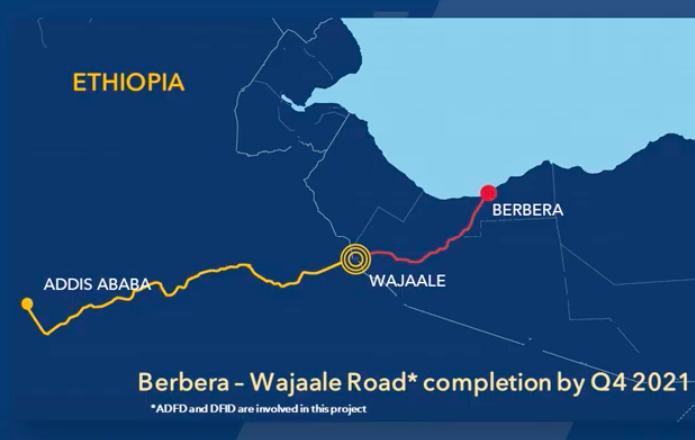
For Somaliland, regional integration should be considered within the context of its geographical position, commercial networks, knowledge, and infrastructure development. Somaliland’s location along the Gulf of Aden gives it a potentially important connection between maritime trade and inland markets in the Horn of Africa. The development of Berbera and its associated logistics infrastructure creates an opportunity to connect coastal trade with Hargeisa, Wajaale, Ethiopia, and wider regional markets. The strategic question should therefore extend beyond the volume of goods passing through the corridor and focus on how much local economic value can be created around regional trade.
Berbera as More Than a Port
The long-term economic significance of Berbera should not be considered only in terms of port operations. A port can become the center of a much broader economic ecosystem when it is connected to logistics, warehousing, manufacturing, financial services, technology, transport, skills development, and regional value chains. This creates a possibility for Somaliland to move from a predominantly transit-oriented model toward a more diversified regional economic platform. The opportunity is to connect maritime infrastructure with productive economic activity throughout the wider economy.
The Berbera Corridor and Regional Value Creation
The Berbera corridor should therefore be understood as more than a physical connection between the coast and the Ethiopian border. Its development potential lies in its ability to connect infrastructure with enterprises and markets. Transport companies, warehouses, cold-chain services, packaging businesses, financial institutions, manufacturers, technology companies, and professional services can all potentially benefit from increased regional trade. The corridor can therefore become a platform for employment, investment, and enterprise development if policies that strengthen local productive capacity accompany infrastructure development.
Somaliland Needs to Move from Transit to Value Addition
One of the central questions for Somaliland is whether regional trade will simply increase the movement of goods or whether it will also strengthen domestic production and value addition. A development model based primarily on transit activity can generate important revenues and employment, but a broader value-chain approach can potentially create additional opportunities in processing, manufacturing, packaging, logistics, financial services, and professional services. Regional integration should therefore link to a deliberate strategy that strengthens Somaliland-based enterprises so they can participate in regional supply chains.
MSMEs Should Be at the Centre of Regional Integration
Large infrastructure projects can create the physical foundations for integration, but MSMEs can generate much of the economic activity surrounding those systems. Small businesses need access to finance, market information, accounting systems, digital tools, quality standards, business development services, and export-readiness support. If regional integration is to produce broad-based economic benefits, MSMEs should not be treated as peripheral beneficiaries. They should be considered active participants in the regional economy.
Women and Youth as Regional Economic Actors
Regional integration should also be considered from the perspective of people rather than only institutions. Women entrepreneurs, young business owners, skilled professionals, workers, and producers should have meaningful opportunities to participate in regional markets. This requires investment in skills, entrepreneurship, finance, technology, and market access. Integration becomes more developmentally meaningful when it expands opportunities for groups that may otherwise face restrictions due to the size or limitations of their domestic markets.
Standards and Regulatory Harmonization
Different national standards and regulatory requirements can become significant barriers to regional trade even when tariffs are reduced. A product that meets the requirements of one market may face additional testing or certification requirements in another market. Harmonized standards, mutual recognition arrangements, and compatible customs procedures can therefore reduce unnecessary costs for businesses. IGAD’s Regional Trade Policy specifically emphasizes the necessity of harmonization of national policies, customs procedures, and standards and for mechanisms that support mutual recognition.
Digital Integration as the New Infrastructure
Regional integration in the modern economy cannot depend exclusively on physical infrastructure. Digital systems are increasingly essential for customs, payments, business registration, e-commerce, financial services, logistics, and access to market information. Digital interoperability can reduce transaction costs and allow businesses to participate in regional markets without requiring a physical presence in every country. The EAC itself identifies digitalization and ICT development as important elements of its wider regional integration agenda.
Regional Integration Must Support Industrialization
The ultimate objective should not be simply to increase the volume of trade between African countries. Integration should also support industrialization and value addition. African economies can generate greater economic benefits when regional value chains increasingly process and transform agricultural products, livestock, fisheries, minerals, and other resources. This can create employment, strengthen enterprises, support technology transfer, and increase the value retained within African economies.
The Connection Between EAC, IGAD, and AfCFTA
The EAC and IGAD should not be viewed as isolated integration arrangements. They form part of a broader African integration architecture. IGAD’s Regional Trade Policy recognizes the importance of supporting member states in implementing their obligations under the African Continental Free Trade Area. This creates an important principle for Africa: continental integration should build upon functioning regional markets, while regional organizations should contribute to a wider African economic system rather than creating disconnected economic spaces.
Somalia and the Changing East African Economic Geography
Somalia’s accession to the EAC adds an important dimension to the economic geography of East Africa and the Horn. Somalia became a full EAC member on 4 March 2024. This creates potential for stronger institutional and commercial connections between the Horn and East African markets. It also demonstrates that the boundaries between East Africa and the Horn are becoming increasingly interconnected from an economic perspective.
Somaliland and the Broader Regional Economic Question
For Somaliland, the regional integration discussion should focus primarily on economic connectivity, enterprise development, infrastructure, investment, trade facilitation, and market access. The question is not simply how Somaliland can participate in regional trade, but how regional trade can also contribute to domestic economic transformation. This means strengthening the connections between Berbera, Hargeisa, Wajaale, and other economic centers while building the enterprises, skills, financial systems, and productive capacity necessary to capture greater value from regional markets.
From Competition Between Corridors to Regional Complementarity
The Horn of Africa contains several ports, corridors, and economic centers. Regional development does not necessarily require every location to compete for the same economic activity. A more integrated approach can allow different ports, cities, and corridors to develop complementary functions. Greater connectivity can provide landlocked economies with diversified access to international markets while allowing coastal economies to develop logistics, manufacturing, and service industries around those connections. The outcome may yield a more robust regional economic framework.
What Africa Needs to Add to the Integration Agenda
The next phase of African integration should place greater emphasis on implementation, productive capacity, and private-sector participation. Customs reform needs to be accompanied by logistics development. Market access needs to be accompanied by enterprise development. Infrastructure needs to be connected to industrialization. Digital connectivity needs to be linked to digital trade. Financial integration needs to provide practical access to trade finance. Skills development needs to respond to regional labor market demand. Integration therefore needs to become an integrated development agenda rather than a narrow trade agenda.
Implementation Is More Important Than Agreements Alone
The existence of regional agreements does not automatically create regional markets. Implementation determines whether businesses and citizens experience the benefits. IGAD’s own policy framework emphasizes that implementation is central to translating regional trade commitments into tangible improvements, including harmonized policies, faster movement across borders, mutual recognition of standards, and mechanisms for monitoring compliance. This is perhaps one of the most important lessons for Africa: the success of integration should ultimately be measured through practical changes in economic activity rather than the number of agreements signed.
A Development Agenda Built Around Connected Markets
From SomDev Consultancy’s perspective, we should understand regional integration as a development, enterprise, investment, and institutional transformation agenda.
The objective should be to connect markets with infrastructure, enterprises with finance, workers with opportunities, producers with consumers, and national economies with regional value chains. This approach moves regional integration beyond a government-centered process and recognizes the roles of businesses, communities, investors, professionals, universities, and civil society in making integration work.
The Future of African Integration
Africa’s future economic competitiveness will depend partly on its ability to operate at a larger scale. Individual countries will continue to have important national responsibilities, but regional markets can create opportunities that are difficult to achieve through isolated economies. The EAC provides one institutional model for progressively deepening integration, while IGAD provides a framework for economic cooperation in the Horn. The AfCFTA provides the continental ambition for economic integration. The challenge now is to connect these different levels to practical economic opportunities.
Conclusion: Connecting Africa Economically and Productively
Regional integration should ultimately be about more than removing borders or increasing trade statistics. It should enable African businesses to reach larger markets, African producers to participate in regional value chains, African workers to access opportunities, African investors to identify new markets, and African communities to benefit from improved connectivity. For East Africa, the Horn of Africa, and Somaliland, the opportunity is to transform geographical proximity into economic cooperation and infrastructure into productive ecosystems.
The central question for the next phase of African development is therefore not simply how to connect countries, but how to make those connections economically productive. This means moving from isolated markets toward connected markets, from transport corridors toward economic corridors, from raw-product exports toward value addition, from individual enterprises toward regional value chains, and from infrastructure projects toward integrated economic ecosystems.
For Somaliland, the opportunity is particularly relevant: Berbera can be viewed not only as a port but as part of a wider economic corridor; the corridor not only as a transport route but as an economic ecosystem; and regional integration not only as external trade but as a pathway toward domestic enterprise development, investment, and job creation.
For Africa, the long-term objective is even broader: to build an interconnected continent in which markets, people, capital, infrastructure, knowledge, and productive capacity reinforce one another.
That is where regional integration becomes more than a policy concept. It becomes a development strategy.