
From Early Oil Exploration to a New Era of Energy Connectivity
SomDev Consultancy Innovation, Investment & Impact Solutions Company Building Solutions. Creating Opportunity. Delivering Impact.
Petroleum Is More Than a Resource
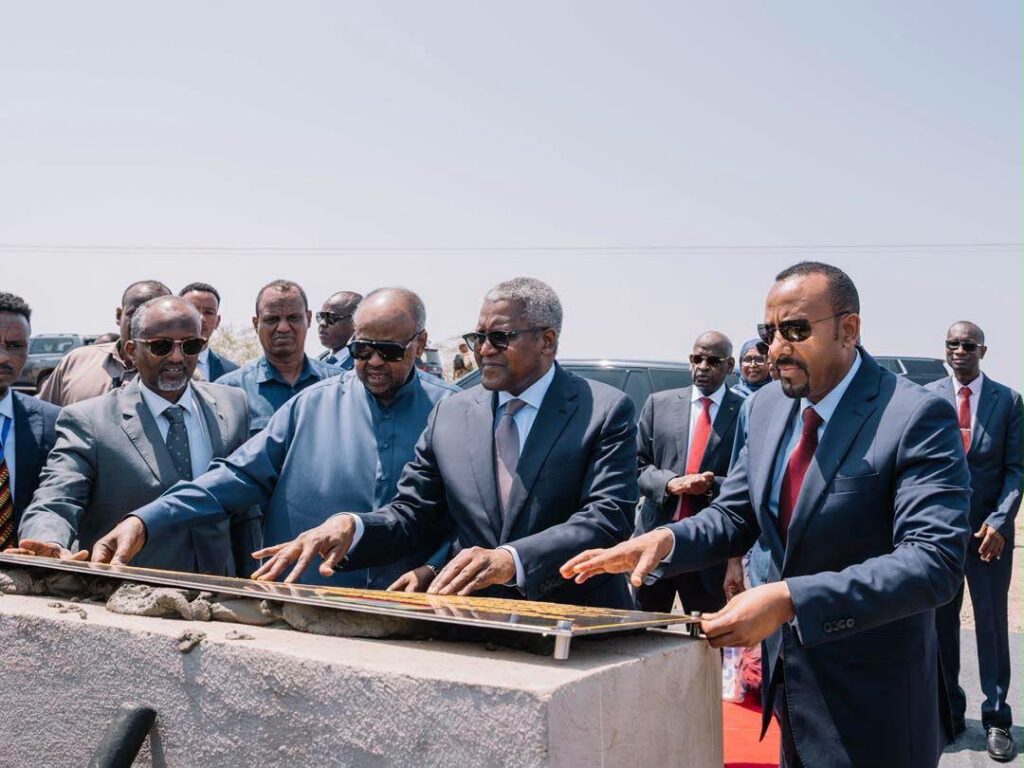
The petroleum story of the Horn of Africa is a story of geography, infrastructure, trade, investment, and regional economic dependence. For more than a century, countries across the region have explored for hydrocarbons, imported petroleum products, developed ports and transport corridors, and attempted to establish infrastructure capable of connecting energy supplies with growing domestic markets. The announcement on 24 September 2026 of a planned US$660 million refined-petroleum pipeline between Djibouti and Ethiopia therefore represents not an isolated infrastructure project but another stage in a much longer regional process. The proposed 120-kilometer pipeline will connect Damerjog in Djibouti with Dewele in Ethiopia and will be supported by approximately 1.175 million cubic meters of storage capacity at the two ends (Reuters, 24 September 2026; Ethiopian News Agency, 24 September 2026).
Petroleum Has a Long History in the Horn of Africa
Petroleum exploration in the Horn of Africa is not a recent phenomenon. In Somaliland, petroleum exploration interest dates back to 1912, when an oil seep was reported at Dhagah-Shabel, approximately 38 kilometers southeast of Berbera. In 1959, Standard Vacuum drilled three wells in the area, with two recovering small quantities of free oil. Exploration interest intensified again during the late 1970s and 1980s, when companies including Conoco, Chevron, and GECO became involved. Between 1986 and 1990, Conoco conducted more than 4,000 kilometers of 2D seismic surveys across extensive areas of Somaliland (Government of Somaliland, Petroleum Booklet, 2023).
This history provides an important lesson. Petroleum potential alone does not automatically create a petroleum economy. Exploration must be connected to infrastructure, capital, technical expertise, institutions, markets, transportation, and reliable investment conditions. The experience of the Horn therefore demonstrates that the economic value of petroleum depends not only on what lies beneath the ground but also on the systems built above it.
Ethiopia’s Petroleum Story Is Closely Connected to Djibouti
Ethiopia presents one of the clearest examples of how geography can shape energy security. As a landlocked country, Ethiopia depends on maritime gateways to import petroleum and other strategic commodities. The historical development of the Addis Ababa–Djibouti railway created an early foundation for moving fuel and other goods between the coast and the Ethiopian interior. Over time, the relationship developed from railway transportation into a wider corridor involving ports, roads, railways, storage, logistics, and fuel distribution.
The Ethiopia–Djibouti relationship in petroleum is therefore more than a contemporary commercial arrangement. It is the product of more than a century of geographical and infrastructure development. The new pipeline builds upon this established relationship while introducing a more dedicated petroleum transportation and storage system.
The Assab Experience Changed Ethiopia’s Energy Geography
Ethiopia’s earlier access to the Red Sea through Assab also shaped its petroleum history. The development of the Assab refinery represented an attempt to strengthen domestic petroleum processing and reduce dependence on imported refined products. However, the loss of direct access to Assab following Eritrea’s independence fundamentally changed Ethiopia’s petroleum geography and increased the strategic importance of Djibouti as a maritime gateway.
This history demonstrates why petroleum infrastructure in the Horn cannot be separated from geography and regional relationships. A country’s energy security can be influenced not only by its own resources but also by the availability, reliability, and efficiency of neighboring transport corridors.
The Pipeline Idea Has Been Developing for Years
The idea of creating a dedicated petroleum pipeline between Djibouti and Ethiopia is also not entirely new. In 2015, Ethiopia and Djibouti pursued a proposed multiproduct petroleum pipeline intended to transport diesel, gasoline, and jet fuel from Djibouti toward Ethiopia. The earlier proposal was approximately 550 kilometers and was intended to reduce Ethiopia’s dependence on road-based petroleum transportation.
That earlier initiative did not become an operating pipeline. The significance of the 2026 announcement is therefore that the two countries are continuing to pursue a strategic objective that has existed for years: creating a more efficient and resilient petroleum corridor between the Djibouti gateway and Ethiopia’s inland market.
The 2026 Pipeline Represents a New Phase
The newly announced project has a more focused configuration. The planned pipeline will extend approximately 120 kilometers from Damerjog in Djibouti to Dewele in Ethiopia, with approximately 375,000 cubic meters of storage capacity at Damerjog and 800,000 cubic meters at Dewele. Reuters reported an estimated investment of US$660 million and an expected operational timeline of approximately 18 months (Reuters, 24 September 2026).
The project is being developed through a partnership involving Ethiopian Investment Holdings and the Dangote Group. Ethiopian officials have described the infrastructure as an effort to reduce logistics costs and delays while strengthening energy security and supply-chain resilience (Ethiopian News Agency, 24 September 2026).
The significance therefore extends beyond the pipeline itself. The real system consists of the port, petroleum terminal, storage facilities, pipeline, inland infrastructure, transportation networks, distribution systems, and the Ethiopian consumer market.
Energy Security Is an Economic Development Issue
Petroleum is an essential input into almost every productive sector of a modern economy. Transport companies need fuel to move goods. Farmers depend on fuel for machinery and irrigation. Manufacturers require energy for production and distribution. Construction depends on fuel-powered equipment. Aviation depends on reliable fuel supplies. Businesses and households are consequently affected by the availability, cost, and reliability of petroleum.
For this reason, improvements in petroleum logistics can have consequences across the wider economy. Better storage can strengthen reserve capacity. Pipeline transportation can reduce dependence on repeated tanker movements. More efficient logistics can potentially reduce delays and improve supply planning. Ethiopian officials have specifically linked the new project to lower logistics costs, improved energy security, and stronger supply-chain resilience (Ethiopian News Agency, 24 September 2026).
The Horn’s Petroleum Geography Is Larger Than Oil Production
The Horn of Africa should not be viewed solely in terms of which country has oil or gas reserves. The region’s strategic importance also comes from its location along the Red Sea, Gulf of Aden, Bab el-Mandeb, and western Indian Ocean. This geography places the Horn close to major international maritime routes connecting Africa, the Middle East, Asia, and Europe.
Petroleum infrastructure therefore includes much more than exploration and extraction. It includes ports, terminals, storage, pipelines, roads, railways, fuel distribution, financial services, engineering, insurance, technology, maintenance, and technical skills. This broader understanding creates a much larger economic-development perspective for the region.
The Real Opportunity Is the Petroleum Ecosystem
The most important business opportunity may not necessarily be the pipeline itself. It may be the ecosystem that develops around it. Storage facilities require operators and maintenance companies. Petroleum terminals require logistics, security, and technical services. Pipelines require engineering, inspection, and maintenance. Fuel distribution requires transport and supply-chain management. Financial institutions can support trade finance and working capital, while technology companies can provide digital monitoring, inventory management, and supply chain systems.
This means that a major infrastructure project can become a platform for wider enterprise development. The economic question should therefore extend beyond who finances and builds the infrastructure to which African companies, entrepreneurs, professionals, and workers can participate in the value chain created around it.
African Capital and African Infrastructure
The participation of the Dangote Group adds another important dimension. The project brings together Ethiopian public investment capacity and Nigerian private industrial capital in a cross-border East African infrastructure project. Reuters reported that Ethiopian Investment Holdings and the Dangote Group will develop the pipeline, while Dangote already has other major industrial investments in Ethiopia (Reuters, 24 September 2026).
This illustrates the growing importance of African companies investing beyond their national borders. Africa will continue to require international capital, development finance, and technology, but stronger African corporations can also become important drivers of regional infrastructure development.
The broader opportunity is to create an environment where African capital does not simply finance individual projects but contributes to regional industrialization, supply chains, employment, skills development, and enterprise growth.
Somaliland’s Position in the Petroleum Geography
Somaliland has a distinctive position within this wider petroleum and logistics landscape. Its petroleum exploration history goes back to 1912, while its coastline provides direct access to the Gulf of Aden and the wider maritime trading system. Government documentation records historical drilling and extensive geological and geophysical exploration, including more than 4,000 kilometers of 2D seismic surveys undertaken by Conoco between 1986 and 1990 (Government of Somaliland, Petroleum Booklet, 2023).
However, Somaliland’s economic opportunity should not depend exclusively on whether commercially exploitable oil and gas are eventually developed. There is a much broader opportunity surrounding energy logistics, port services, storage, transportation, industrial activity, and regional trade.
This makes Berbera particularly important within the regional economic discussion.
Berbera Should Be Viewed as an Economic Gateway
A modern port should not be viewed simply as a location where ships load and unload cargo. Its economic significance increases when it connects with roads, storage facilities, logistics centers, industrial zones, customs systems, financial services, energy infrastructure, and productive enterprises.
The Ethiopia–Djibouti experience demonstrates this clearly. Djibouti’s economic relationship with Ethiopia is not based only on port access. It is based on a wider corridor connecting maritime infrastructure to an enormous inland market.
The same principle provides an important framework for thinking about Berbera. The strategic question is not only how much cargo can move through the port. It is also what economic ecosystem can develop around the port and the regional markets it connects.
Regional Corridors Should Be Complementary
The emergence of stronger infrastructure between Ethiopia and Djibouti does not necessarily mean that other regional corridors must compete directly against it. A stronger Horn of Africa economy can benefit from multiple efficient gateways.
Djibouti can continue to serve Ethiopia’s major market. Berbera can develop its own regional logistics and trade role. Mombasa can continue serving East African markets. Other Red Sea and Gulf of Aden gateways can develop complementary functions.
The broader objective should therefore be regional connectivity, diversification, and resilience rather than treating regional infrastructure as a zero-sum competition between individual ports or countries.
From Corridors to Regional Integration
The deeper economic opportunity is to connect infrastructure systems across borders. Ports should connect to roads and railways. Storage should connect to distribution. Energy should connect to manufacturing. Financial services should connect to trade. Skills development should connect to industry. Digital systems should connect supply chains.
When these systems work together, an infrastructure corridor becomes more than a transportation route. It becomes a platform for investment and production.
This is particularly relevant to the broader African agenda of regional integration. The East African Community, the Intergovernmental Authority on Development, and the African Continental Free Trade Area all reflect different dimensions of a larger objective: creating more connected African markets and reducing the economic costs created by fragmented infrastructure and trade systems.
Petroleum Infrastructure Can Support Industrialization
The long-term value of petroleum infrastructure should therefore be measured by its ability to support productive economic activity. Reliable energy logistics can strengthen manufacturing, agriculture, transport, warehousing, construction, and other sectors. The objective should not simply be to move fuel faster. It should be to create the conditions in which reliable energy supply supports investment, enterprise formation, industrialization, and employment. That distinction is critical for the Horn of Africa because the region’s demographic growth and expanding markets will require much greater productive capacity.
The Larger African Business Opportunity
The Ethiopia–Djibouti project illustrates a wider opportunity across Africa. Infrastructure investment can create demand for engineering firms, logistics companies, warehouse operators, technology businesses, construction companies, financial institutions, insurers, professional-service providers, training institutions, and maintenance specialists.
The most significant economic impact may therefore emerge outside the physical infrastructure itself. If governments, investors, and development institutions deliberately connect large infrastructure investments with African MSMEs, local procurement, technical training, and regional supply chains, infrastructure can become a mechanism for creating broader economic participation.
This is where infrastructure development and enterprise development should meet.
SomDev Consultancy Reflection
From the perspective of SomDev Consultancy, the history of petroleum in the Horn of Africa demonstrates a broader development principle: resources do not create economic transformation by themselves. Infrastructure, institutions, investment, enterprise, skills, markets and regional connectivity determine whether resources become productive economic opportunities.
The Ethiopia–Djibouti pipeline illustrates this principle because it brings together a maritime gateway, petroleum storage, pipeline transportation, inland infrastructure, public investment, private African markets, capital, and a major regional market. The project is therefore relevant not only to petroleum but also to the wider future of regional economic integration (Reuters, 24 September 2026; Ethiopian News Agency, 24 September 2026).
For Somaliland and the wider Horn of Africa, the lesson is equally important. The future economic opportunity may not be determined only by who discovers oil or gas. It may increasingly be determined by who develops the infrastructure, enterprises, services, skills, and regional value chains capable of converting energy and connectivity into broad-based economic opportunity.
From Petroleum Infrastructure to Economic Transformation
The Ethiopia–Djibouti petroleum pipeline is the latest chapter in a much longer history of energy, trade, and connectivity in the Horn of Africa. From early petroleum exploration in Somaliland to Ethiopia’s historic dependence on maritime gateways, from domestic refining attempts to earlier pipeline proposals, petroleum has always been connected to the region’s geography and infrastructure.
The new project brings this history into a new phase by combining a maritime gateway, large-scale storage, pipeline transportation, inland infrastructure, African private capital, and a major regional market. Its significance therefore extends far beyond petroleum.
For the Horn of Africa, the larger opportunity is to transform strategic geography into strategic connectivity.
For Africa, the wider lesson is that infrastructure should not be treated simply as physical construction. It should become a platform for enterprise, investment, regional trade, industrialization, and economic transformation.
For Somaliland, the opportunity is to think beyond petroleum exploration and consider how Berbera, energy infrastructure, logistics, industrial development and regional markets can contribute to a broader economic ecosystem.
The future of the Horn’s petroleum economy will not be determined only by what lies beneath the ground. It will also be determined by what the region builds above it: ports, pipelines, storage, roads, railways, enterprises, institutions, development,markets and regional connections.
When infrastructure connects markets, investment connects infrastructure to enterprise, and regional cooperation connects national economies, a corridor becomes more than a route. It becomes a foundation for economic transformation.